
Our largest group of customers
Assisted living and retirement moving, done gently
Moving your mom or dad into a retirement community, assisted living or memory care. The move most families are least prepared for, and the one we do most often.

Why customers trust BEST MOVE
4.7
- Since 1985
- Accredited member, Simi Valley Chamber of Commerce
- A+ BBB (opens external site)
- CAL-T #188876 · Licensed & Insured (opens external site)
- No Hidden Charges
Almost every senior move we run is arranged by an adult son or daughter, frequently from another state, usually on a deadline someone else set. We have been doing them in Ventura County for 41 years — here is exactly how they work, so you know what you are arranging before you call anyone.
Why a senior move is not a normal house move
On paper it looks easier. There is less furniture, the distance is usually short, and the destination is a single room rather than a whole house. In practice it is harder, and for reasons that have nothing to do with lifting.
A house move has one deadline: the day. A senior move has four overlapping ones — the community's move-in window, the date the house has to be empty for escrow or a lease, the family members who can only get there on a certain weekend, and your parent's own readiness, which does not follow anyone's calendar.
The other difference is that you are not really moving furniture. You are compressing a life that has been in one place for thirty or forty years into a room, and deciding on your parent's behalf what survives that. Nobody feels good about it, and no mover can make that part pleasant. What we can do is take the logistics off you entirely, and not add pressure to a day that already has plenty.
You are not really moving furniture. You are compressing a life that has been in one place for forty years into a room.
What we handle, and what we do not
It is worth being precise about this, because families often assume a mover does either much more or much less than we actually do.
We handle:
- Working to whatever move-in window, elevator slot and entrance your family agrees with the community — and telling you exactly what to ask them for
- Measuring your parent's furniture against the new floor plan before move day, and telling you what will not fit
- Packing — all of it, part of it, or just the fragile things, at your choice
- Wrapping, moving and rebuilding the furniture, including hospital beds and lift chairs
- Setting the apartment up completely: bed made, chair positioned, pictures hung, lamp on the right side
- Packing and loading what does not fit but nobody is ready to part with into a portable container, so it can wait somewhere while the family decides
- Clearing and emptying the family home afterwards, donating and recycling first
2 calls
We call you when we start and when we finish — so you know where the day is from wherever you are.
We do not:
- Arrange the move-in slot on your behalf. That agreement is between your family and the community — we tell you exactly what to ask for and then work to what you agree
- Decide what your family keeps. We will advise on what fits; the choices are yours
- Move rented or leased medical equipment that the supplier is contracted to collect
- Handle the sorting and emotional side of downsizing — that is a senior move manager's job, and we work alongside them
- Transport medication, documents, jewellery or anything irreplaceable. Those go with you personally
The part families do not expect
What to agree with the community before move day
Assisted-living and memory-care buildings run move-ins on their own terms, and those terms are not negotiable by you or by us. The community will only take the booking from you — they will not schedule a resident's move on a mover's say-so — so these are yours to settle. Learning them late is the single most common reason a senior move slips a week, so here is the whole list, and we will work to whatever you agree.
-
Weekday windows only
Most communities allow move-ins Monday to Friday inside set hours, often 9am to 4pm, so staff are on hand and hallways are clear of residents at mealtimes. Weekend move-ins are the exception, not the rule.
-
One reserved elevator
Buildings typically have a single service elevator and it gets booked in blocks. If your slot is 10am to 1pm, the truck needs to be there at 9:30, not 11.
-
A certificate of insurance on file
Nearly every community requires a COI naming them, filed before move day. Ask them who it should be addressed to and what limits they want, tell us, and we will have our insurer issue it to their office.
-
A move-in coordinator to talk to
Larger communities have one, and they are the person who actually controls the schedule. Get their name and direct number early — they are the single most useful contact in the whole process.
-
Dock and door restrictions
Where the truck may park, which entrance is used, and whether floor and wall protection is required in the corridors. All decided by the building.
-
Set up before arrival, usually
Especially in memory care. The room is finished before the resident comes in, so they walk into a made bed and a familiar chair rather than a room full of boxes.
What we do, wherever you are
Once you have the window, send it to us with a few photographs of each room and we will quote the whole job from those — no visit needed, which is what most out-of-state families are actually asking for when they call. Then we work to the window you agreed.
And we call you when we start and when we finish, and if anything comes up in between. If you are three time zones away, that is the part that lets you get on with your day.
Downsizing, without making the day worse
The furniture is not the problem. The problem is that every piece of it is attached to something, and the person it is attached to is usually standing right there.
A few things we have learned across a lot of these moves, offered for whatever they are worth:
- Start from the room, not the house. Decide what goes into the new apartment first, using the floor plan. Everything else becomes a separate, later problem, which is much easier than sorting an entire house against no criteria.
- Let your parent choose the anchors. The chair they sit in, the bed they sleep in, the pictures they look at. If those three are theirs to pick, the rest tends to follow without a fight.
- Photograph what does not go. An album of the house and the furniture solves a surprising amount of the grief, and costs an afternoon.
- Do not decide everything at once. Storage exists for exactly this. Putting the dining set in a container for six months is cheaper than a family argument, and the decision gets easier once everyone has settled.
- Keep the first-night box with you. Medication, glasses, hearing-aid batteries, the phone charger, a change of clothes and the TV remote. Not on the truck.
If the sorting itself is the hard part, that is a senior move manager's specialty rather than ours, and it is worth the money. We work alongside them regularly and can put you in touch.
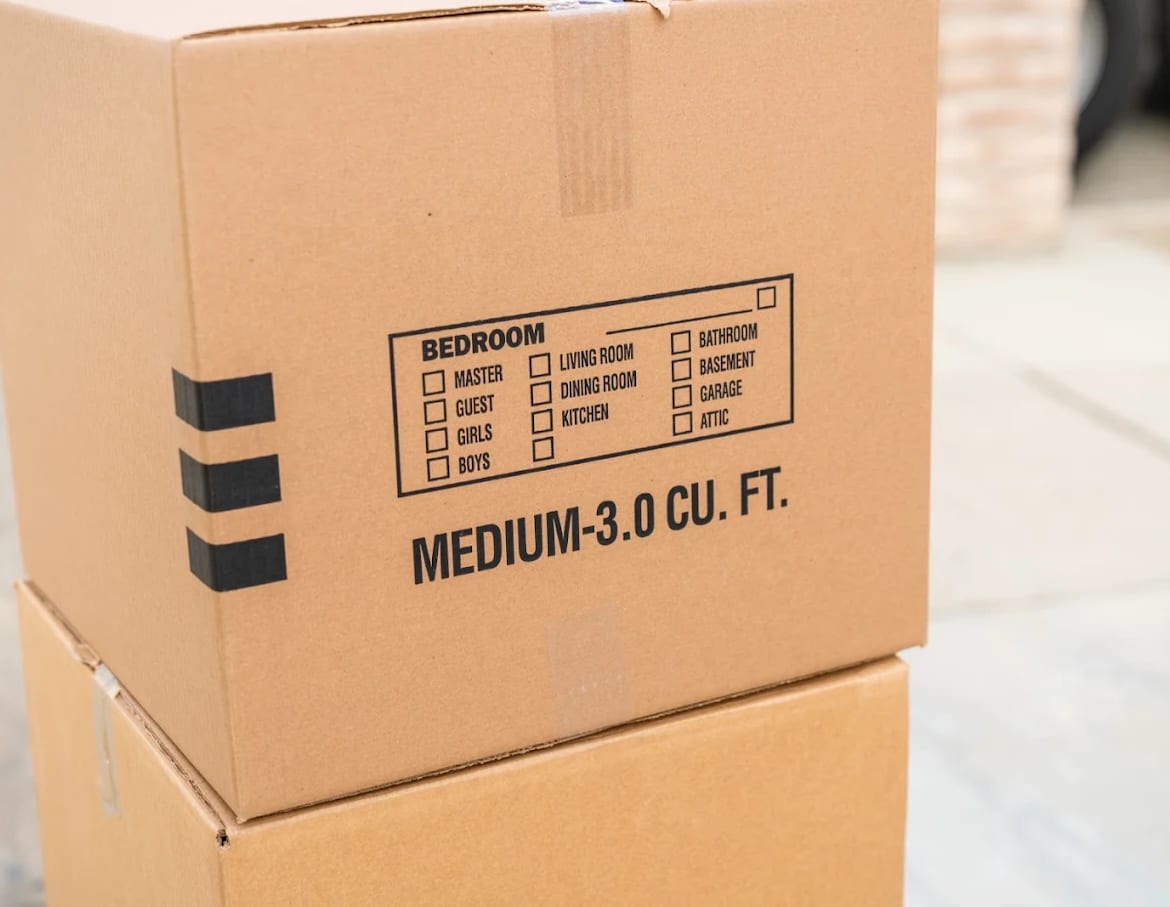
What we do differently on these jobs
- Crews briefed before arrival that this is a senior move, not a house move
- The apartment set up completely before we leave — bed made, chair placed, pictures hung
- Familiar items positioned the way they were at home, on the same side of the bed
- Low noise, no shouting between rooms, hallways kept clear for residents
- If your parent says something stays, it stays — we call you rather than overrule them
- One point of contact who can reach you by phone all day
Move day
What to expect, hour by hour
A typical move from a Ventura County house into a single assisted-living apartment. Most are finished inside a day, and many inside half of one.
-
Early morning
Crew arrives at the house. We walk it with you, confirm exactly what is tagged to go, and start wrapping. Anything ambiguous gets asked about rather than assumed.
-
Mid-morning
Load. Furniture is pad-wrapped before it leaves the room. Boxes go on labelled by destination — apartment, storage, family, or clearance.
-
Move-in window
We arrive at the community inside the booked slot, check in at the front desk, and use the reserved elevator and the entrance they specified.
-
Afternoon
The apartment is set up completely. Bed assembled and made, chair placed, pictures hung, lamps and TV connected. We leave when it looks lived in, not when the boxes are inside.
If the family home also has to be emptied, that is normally a separate day and a separate quote — same company, same point of contact. See TRASH DAY clearance and storage packing and container loading.
Working with senior move managers
A senior move manager is not a mover. They are a specialist who plans the downsizing itself — sorting room by room with your parent, space-planning the new apartment to scale, arranging estate sales and donations, and doing the patient, unhurried work of deciding what a life reduces to. Many are certified through the National Association of Senior & Specialty Move Managers.
We do the trucks, the wrapping, the lifting and the setup. The two jobs fit together with almost no overlap, and when a family has both, the move day is noticeably calmer — the decisions are already made before we arrive.
If you are already working with one, introduce us early and we will plan directly with them; you do not need to relay messages. If you are not and the sorting is the part you are dreading, ask us. We work alongside several in Ventura County and will happily point you at someone rather than pretend it is a service we provide.
We also work regularly with
- Community move-in coordinators — once your family has agreed the window with them, we plan the day around it
- Realtors and home stagers preparing the family home for sale once it is empty
- Estate sale companies, clearing whatever is left after the sale
- Trust and estate attorneys and fiduciaries managing a property on a family's behalf
If you refer families regularly, we keep a priority scheduling arrangement for professional partners — worth a conversation.
Questions
What adult children ask us
If yours is not here, call (805) 375-0765 and ask. There is no script and nobody is going to try to book you on the first call.
Who can move my mother into assisted living near Simi Valley?
We can. BEST MOVE has been moving Ventura County families since 1985 and senior moves are now the largest single category of work we do — into assisted living, independent living, memory care and skilled nursing communities across Simi Valley, Moorpark, Thousand Oaks, Newbury Park, Camarillo, Oxnard and Ventura.
Call (805) 375-0765 and you will speak to Lyn or Gary directly. Most families call us three to six weeks before the move-in date, but we have handled plenty of moves arranged in under a week.
I live out of state. Can you handle this without me there?
Yes, and we do it often. A large share of the adult children who book these moves live somewhere else, and we run the whole thing by phone and photos — the walk-through, the quote, move day, and the cleanout of the old house afterwards.
What helps most is one decision-maker we can reach on the day, and a floor plan of the new apartment. We will call you when we start, when we finish, and if anything comes up in between.
How do you handle a move into memory care?
Carefully, and usually while the resident is somewhere else. Most memory-care buildings prefer the apartment to be fully set up before the resident arrives, because walking into a room mid-move is disorienting in a way that can genuinely set someone back.
We arrive early, set the room up completely — bed made, chair positioned, familiar pictures on the wall, the same lamp on the same side of the bed — and are gone before they come in. Crews on these jobs are briefed to keep noise low, stay out of hallways where possible, and speak to residents who approach them rather than working around them.
How much furniture actually fits in an assisted-living apartment?
Much less than families expect. A one-bedroom assisted-living apartment is a fraction of the size of a house, and a studio smaller again. In practice what fits is a bed, one comfortable chair, a small dresser, a nightstand, a side table and a limited amount of wall art.
The most useful thing you can do is get the floor plan with dimensions from the community before you decide what goes. We will measure the actual pieces against it and tell you honestly what will not fit, which is a much easier conversation to have three weeks out than on move day.
What happens to everything that does not go?
Usually a mix of four destinations: family members, donation, sale, and disposal. We can handle the last two ends of that in the same job — our TRASH DAY division clears what nobody is taking, donating usable furniture and recycling electronics before anything goes to a landfill.
If the house has to be emptied for a sale, we can move your parent on one day and clear and sweep the house on another, with the same company and one point of contact.
What if my parent has not agreed to what is being taken?
Then we stop and ask. Our crews are instructed that if the resident is present and says something stays, it stays, and we call you rather than overruling them in their own living room.
It is worth walking the house with your parent beforehand and physically tagging what goes. Disagreements are much easier to resolve the week before than with two movers standing in the doorway holding a dresser.
Can you work with our senior move manager?
Yes, and it usually makes the day go better. Senior move managers — many certified through the National Association of Senior & Specialty Move Managers — handle the sorting, the floor planning and the emotional labour of downsizing; we handle the trucks, the wrapping and the lifting. The two roles fit together cleanly.
If you are working with one, put us in touch early and we will plan the day directly with them. If you are not and you want one, ask us — we work alongside several in Ventura County regularly.
Can you move a hospital bed, lift chair or other medical equipment?
Yes. Hospital beds, lift chairs, mobility scooters, walkers, transfer benches and oxygen concentrator setups all move regularly with us.
One caution: equipment that is rented or leased through a medical supplier usually has to be returned to or relocated by the supplier under the lease terms. Check who owns each piece before move day so nothing gets moved that should have been collected.
Do you deal with the community over the move-in time?
The community will take the booking from you, not from us — the move-in agreement is between your family and them, and they will not schedule a resident’s move on a mover’s say-so. So the window is yours to agree, and we plan the day around whatever you agree.
What we will do is tell you exactly what to ask them for, which is most of the difficulty: the move-in window and the day, the reserved service elevator, where the truck may park and which entrance to use, and whether they need a certificate of insurance naming them before the truck arrives. Send us what they say and we work to it.
How much does a senior move cost?
A move from a house into a single assisted-living apartment is normally a shorter job than a full household move, because far less is going — many are finished in half a day with a two or three-person crew.
It is priced hourly at the same rate as any local move, with no charge for stairs, long carries, fuel or reassembling the bed at the other end. If a house cleanout is part of it, that is quoted separately by volume so you can see the two numbers independently and decide.
No obligation, no pressure
Planning a move for a parent?
Talk to a real person about what it actually involves — even if the date is months away and nothing has been decided yet. Most families call us well before they are ready to book, and that is the right time to call.
(805) 375-0765Ask for Lyn or Gary. We answer 7 days, 7:30am – 6:30pm.
The rest of a senior move
-
Residential Moving
Full-service house, condo and apartment moves with wrapping, disassembly and reassembly included in the rate.
About residential moving -
Packing and Prep
Full-home, partial or kitchen-only packing done the day before, with materials that actually protect what is inside.
About packing and prep -
Junk Removal & Hauling — TRASH DAY
Our TRASH DAY division clears unwanted appliances, furniture and whole cleanouts — donating and recycling before anything sees a landfill.
See TRASH DAY pricing -
Storage Packing & Container Loading
Packing and loading, quoted separately. We box your loose items, and we professionally load your container so nothing shifts.
About storage packing & container loading
Planning a move for a parent?
Talk to a real person about what the move actually involves. Family-owned since 1985, and the same people answer the phone every time you call.
No deposit to book · No hidden charges · Family-owned since 1985